Shopify vs Laravel

You already have it clear. You want to sell your products online. Today we are going to show you the advantages of creating an online store with one of the platforms that are making the most “noise”: Shopify eCommerce Development Services. And we are going to compare it with Laravel web development. From the basic to the most advanced: we will try to decode the comparison. And also guide you to choose the best Shopify Development Company and Laravel Development Company.

What is Shopify’s development?

Shopify is a platform with which to develop an online store and has proliferated since 2006. The speed with which it has penetrated the market is mainly due to the ease it gives the user to have their store ready quickly. The platform includes hosting, and you must buy a subscription directly with them, which means that you cannot install your store on any other server.

It is of no doubt that Shopify is the best platform to create and design algorithm friendly and responsive online store. However, instead of using existing design and templates, it is better to consult with a professional Shopify Development Company. If you are looking for such a professional Shopify web development company at an affordable price, contact IOGOOS solutions. It is one of the best and leading e-commerce development companies. It has professional experience, an expert team of designers and developers, and extended support.

What is Laravel Development?

Laravel is a PHP web framework for the development of web applications or e-commerce apps. It is an open-source and free web framework. For those people, who want to have maximum control and personalization of their web application, Laravel is one of the best alternatives. Taylor Otwell creates it. It follows the MVC pattern to develop web applications. As dictated by its slogan, Laravel is the PHP framework for artisans. If you need customization, Laravel development is ideal.

It would help if you remembered that Laravel development is not as flexible as Shopify Development Services. How and why, we will try to reveal them soon as we progress to the next step: Shopify or Laravel – which is better?

Shopify Development Company

Shopify vs. Laravel – which is better?

Shopify wants to stand out for its ease of use and “create” your store with functions such as “drag and drop.” Besides, Shopify offers you a predetermined template from the beginning of the registration. It is better to choose Shopify web Development Services as it provides hundreds of in-built features. Now selling products directly from your website is possible.

With Laravel, you will need a little more training. But it allows you to personalize your eCommerce fully. If you want the ease of use, Shopify certainly has one more point in its favor than Laravel. If you are looking for customization, then it is Laravel development. Consult with the Shopify experts online, now.

Shopify Development Company

 Which is more functional – Laravel or Shopify?

When choosing a platform on which to develop an online store, it is essential to consider the functionality and scalability of the tool, since eCommerce involves the use of multiple payment methods, shipping options, offer management, etc. If you want to gain functionality with Shopify, you have to increase the plans contracted with the company. The basic Shopify plan includes a list of unlimited products and has up to two users. But it does not include processing payments through the platform.

With Laravel, you have access to all the functionalities from the beginning without any extra cost. The only thing that makes Laravel development vulnerable in the competition is that you need to hire a hosting company separately to host the website. Guess what, Shopify already includes it. You are free to sell services/products online across multiple social media sites and marketplaces.

Shopify Development Company

Which one has better performance – Laravel or Shopify?

SEO – A website that does not flow, that does not load fast is a waste of money, why? Because no user will wait to see how your website stacks. You must understand the SEO factors that most influence positioning. So, worry about choosing the platform that allows you to offer your future clients an optimal loading speed.

SECURITY – When you have an online store, you should know that you are handling your customers’ information. So, one issue you should worry about is security. If your website is attacked and your customers’ data is leaked, you will be exposed to a lawsuit, but your reputation will also fall.

These are the two primary factors that a web developer must understand. However, there are other factors too. In this case, Shopify gains positive remarks. Shopify is the ideal choice when it comes to SEO and Security. Why? Although Laravel indeed offers a sound security system, Shopify has more security modules or extensions than Laravel development.

If you want to know more about this topic, consult an expert e-commerce web developer from IOGOOS solutions, one of the leading Laravel Company and Shopify Company.

Deliver high-quality shopper experience with Shopify Development Services

This pandemic has shaken everyone in this entire world whether they are Top, mid, or low business entrepreneurs including the consumer psyche. Making business again the long-term success is too much difficult. At this time, IOGOOS Solution come out with many marketing strategies that boost and enhance revenue with low investment. It is in many forms: If your business is in an infancy stage, website designing services work. If it is an eCommerce business, then Shopify Development Company helps you to expand your store in an online world. In addition to this, if the business is already in peak stage but unable to reach customers, in that case consulting a professional Search Engine Optimisation Agency for getting the best affordable SEO Services works best.

We believe to work in ever-evolving techniques with high financial performance. Living in the 21st Century and working with traditional approaches is no longer enough. To maintain and sustain the dignity of your brand in the market must extend beyond traditional focus so that it works in this dynamic environment. It is best to go for Shopify Development Services for eCommerce acceleration to expand your business to the core.

Creating, enhancing, and maintaining an eCommerce website is not at all easy. Best Shopify Development Company in USA plays a major role in your business success. Hire an expert and professional Shopify Developer that can develop, upload catchy, make it user-friendly, give clear product details like FAQs, navigation tools, contact us, etc. Product range, data size, and online product listing are a few challenges faced by business owners. Being the best Shopify Development Company, IOGOOS Solution believes in and gives assurance to tackle all challenges.

With the high demand for Online Shopping, providing the best customer experience on your business product is a sign of a boost. Shopify Developer in India helps you out in managing eCommerce management with ease. It is fact that your business product is not only the one which is in the market. Customers are more focused on easy navigational sites, with the best offer, pricing, quality, promo codes, vouchers, coupons, etc. Consumers nowadays trust online reviews, ratings, and real product purchased images. These are only the points that can make your business stand out from the crowd.

Professional Shopify Development Agency analyzes and captures the market easily. But it is hard to find an expert Shopify Developer in this competitive world. Always go for Shopify Company which has expertise in all technologies and CMS, which has also core competencies in SEO. Getting Best and Affordable SEO Services in India helps in climbing up in search engines by analyzing demographic and target location. This is a bonus if you approach IOGOOS Services.

Over 15 years of experience in Website Designing Services, IOGOOS Solution is responsible for business growth and new customer approach through updated marketing techniques….

Google Juice: Hard To Get But Tasty To Drink! Part-1

What is Google juice anyway?

If you’ve been blogging for a while I am pretty sure you are not new to this term. For everyone else, I’ll take a few words to explain what it is and how to get it to save you valuable time and several hours of study and research.

In search engine optimization (SEO) terminology, Google Juice is a term that means the unique visitors coming to your website from search engines (primarily Google, because of its domination in the Search Engine market). This is also known as organic traffic which only stops by if your website is optimized for search engines like Google, Yahoo, MSN, etc.

Importance of Google Juice

The more you get, the better it is for you. As per the research done by forrester.com, 80% of Internet users find websites by searching for keywords on popular search engines like Google, Yahoo, MSN Live, Ask, etc. and it’s really important that your web pages are listed in the results. If for a particular search term, pages from your website are listed on the first page of the search results then you are going to have loads of visitors stopping by your website if they are looking for that search term or related stuff.

Pages from your websites stand a chance of getting some visitors even if they are listed on the second or even third page of the search results. Otherwise, you shouldn’t (actually, you can’t!) expect significant traffic coming in from Search Engines unless the person who’s looking for something is patient enough to dig a couple of pages of search results for some search term.

How well are you ranked in Search Engines?

Technically speaking what makes your web presence known is your search engine ranks. Simply put, how well you are known online is determined by the rank your website enjoys in search engines. Page Rank (PR) by Google is one such important metric assigned to websites listed in Google Search Results which webmasters and advertisers often use to judge the quality of a website. The higher it is (on a scale of 10), the better a website is considered, and the higher it is listed in Google Search Engine Results. Obviously, it enjoys more Google Juice than lower-ranked websites.

Get listed in Google within 30 minutes

All those SEO and Make Money Online websites next door will try to show you ways to scale the first page of Search Engine results once you’re listed but what they won’t tell you is how to get listed in Google search results within 30 minutes!

We’ll consider scaling the front page of search results in a later post in the SEO series but right now concentrate on how to get your web pages listed so soon.

This post is the first part of this series (Get Listed in Google within 30 minutes) and will be focused on websites and blogs built with WordPress as CMS. However, a lot of these tips apply to static websites as well. So, let’s start sharing best practices…

WordPress Plugins and SEO

With the popularity of WordPress and the contributions of the WP community, managing websites and implementing SEO has become a lot easier. There are various WordPress plug-ins that are available for SEO purposes but the 2 plug-ins I would like to recommend to you are:

1. Google XML Sitemaps
This plug-in will create a Google sitemap compliant XML-Sitemap of your WordPress blog. It supports all of the WordPress-generated pages as well as custom ones. Every time you edit or create a post, your site map is updated and all major search engines that support the site map protocol, like ASK.com, Google, MSN Search, and YAHOO, are notified about the update.

Once you activate this plug-in go-to plug-in settings and create the sitemap for the first time. You can see the output with this URI: //www.your-domain.com/sitemap.xml. Now we have our sitemap ready so let’s tell Google about it. Type //www.google.com/sitemaps in your browser and log in with your Google ID and Password.

On this website you can submit your sitemap to Google and Google will start indexing your website. This process requires site verification where you need to add a Meta tag or upload an HTML file to your web server. It’s very easy to complete and you can get step-by-step instructions on the Google website.

2. All in One SEO Pack
This plug-in optimizes your WordPress website/blog for Search Engines. It automatically optimizes page titles for search engines and generates META tags. This avoids the typical duplicate content found on WordPress blogs. For WordPress 2.7 (the latest version) you don’t even have to look at the options, it works out of the box. You can override any title and set any META description and any META keywords you want while writing the posts or pages. You can fine-tune almost everything related to search engine optimization. To get the most out of it, do a little keyword research for the content and use the best keywords while writing the posts and pages.

Tomorrow, I will further dig into SEO stuff relating to getting listed in Google within 30 minutes of updating your blog/website. The next thing I’ll talk about is services that your WordPress can automatically ping and notify them about updated content. I’ll also tell you how to fine-tune your link structure (permalinks) as they are not very search engine friendly by default. Stay tuned…

Contact Us

Check Our Portfolio

An easy way to create Loading Bar!

“People count up the faults of those who keep them waiting”
Seems like I kept them busy decoding this loading bar 😀

Recently, while browsing I landed on a page on StackOverflow.com where people were discussing how I implemented this loading bar on www.iogoos.com I could sense a lot of confusion in the discussion so thought I would take the mystery out as I love to share best practices. Here’s how you can create a loading bar in a few steps…

Things You’ll Need

  1. A nice loading image: If you are good at creating animated GIF images that are nice, otherwise you can create a loading image with this cool Ajax Loading Gif Generator.
  2. jQuery: We are creating this loading bar using jQuery so download the jQuery latest version here.

jQuery Code within <head>..</head> tags

<script type=text/javascript src=jquery.js></script>
<script type=text/javascript>
$(window).load(function(){
      $("#loading").hide();
})
</script>

HTML Code within <body>..</body>tags

<div id="loading">
    Loading content, please wait..
    <img src=loading.gif alt="loading.." />
</div>

Make sure you add this code just below the starting <body> tag so it should be downloaded first.

CSS Code for loading DIV

#loading {
    position:absolute;
    width:300px;
    top:50px;
    left:50%;
    margin-left:-150px;
    text-align:center;
    padding: 10px;
    font:bold 11px Arial, Helvetica, sans-serif;
    background: #222222;
    color: #ffffff;
}

Use your imagination and create something nice & unique.

Your comment, suggestion, and feedback are highly appreciated. There’s more to come to stay tuned…

Contact Us

Check Our Portfolio

Enable Auto-Complete Search in WordPress Blog!

“One sometimes finds what one is not looking for”

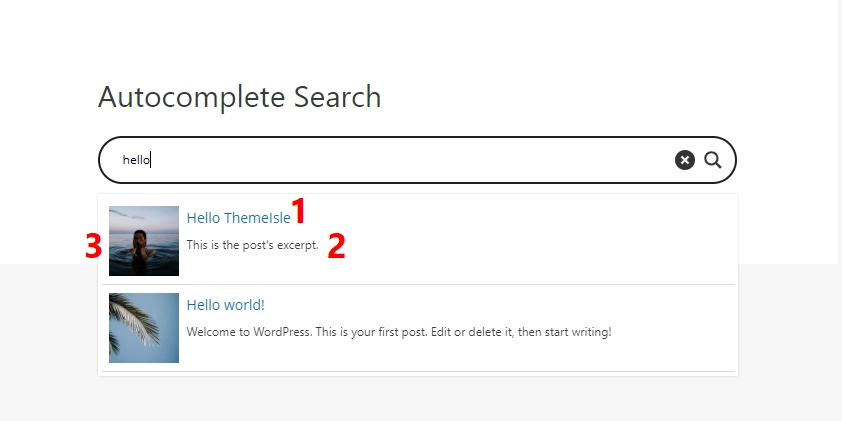
I am pretty sure that you are aware of Google Search Suggest and Yahoo Search Assist features. This feature helps you effortlessly find exactly what you’re looking for. No doubt, it lists a few suggestions to keep the user looking for more and more.

As you type something in the search box, it automatically offers search terms and phrases in real-time. How nice will it be to have the same feature on your website or blog. In this post, I am going to explain an easy way to add a search suggestion feature to your WordPress blog or website.

Things You’ll Need

jQuery: You can download the latest version from jQuery.com
Autocomplete Plugin: Download this plug-in by Jörn Zaefferer from //bassistance.de

Now let’s play with some code

Include this code within <head>..</head> tag.

<script type=text/javascript src=js/jquery.js></script>
<script type=text/javascript src=js/jquery.autocomplete.pack.js></script>
<link href="js/jquery.autocomplete.css" rel="stylesheet" media="screen" type=text/css />

Here I am assuming you are using “js” folder to keep all your java scripts and supported files. You may need to update the location of these files based on your folder setup.

Here’s the actual jQuery code to enable this feature on an input box:

<script type=text/javascript>
    var data = "Search Terms Separated With Spaces".split(" ");  
    $("#myInputBox").autocomplete(data);
</script>

Variable “data” hold the terms that you would like the user to see in the search suggestion list and $(“#myInputBox”) is the id of the search input box.

Let’s check out how we can automatically call WordPress tags in our search suggestions, using WordPress wpdb class:

<?php 
    global $wpdb;
    $search_tags = $wpdb->get_results('SELECT name FROM $wpdb->terms');
    foreach ($search_tags as $mytag){
        echo $mytag->name. ' ';
    }
?>

Here I am using WordPress wpdb class to fetch all tags assigned to the posts.

Here’s the complete code to enable this feature on your WordPress blog. Just replace the folder name with actual folder and the jQuery selector $(“#myInputBox”) with the actual id of search input box.

<script type=text/javascript src=PATH_TO/jquery.autocomplete.pack.js></script>
<link href="PATH_TO/jquery.autocomplete.css" rel="stylesheet" media="screen" type=text/css />
<!-- This goes in the head -->
<script type=text/javascript>
	$(document).ready(function(){  
		var data = '<?php global $wpdb; $search_tags = $wpdb->get_results("SELECT name FROM $wpdb->terms"); foreach ($search_tags as $mytag){ echo $mytag->name. " "; } ?>'.split(" ");
		$("#ID_OF_SEARCH_INPUT_BOX").autocomplete(data);  
	});
</script>

Don’t forget to add your inputs in the comments section below.

Contact Us

Let’s Check Our Portfolio

An easy way to create a light-box with jQuery & CSS

As you already know that I’ve been working on improving the performance of my website and I needed a simple solution to create a light-box effect for Live-Chat on this website. I had many options to choose from available jQuery plug-ins however, the idea was to optimize the code with minimal use of heavy third-party scripts and CSS. Moreover, the only thing I needed was a light-box effect without any other functionality.

So I created the light-box effect with a few lines of code using CSS and jQuery.

Let’s start coding 🙂

xHTML Code

Place this code within <body></body> tags where ever you like.

<a id="show-panel" href="#">Show Panel</a>
<div id="lightbox-panel">
<h2>Lightbox Panel</h2>
You can add any valid content here.
<p align=center><a id="close-panel" href="#">Close this window</a></p>

</div>
<!-- /lightbox-panel -->
<div id="lightbox"></div>
<!-- /lightbox -->

The first line of the above code is a link with id “show-panel” which will display the “light-box” and the “lightbox-panel” DIVs, similarly, on line 7 we have a link with ID “close-panel” to hide these DIVs. This will be handled by jQuery of course.

#lightbox-panel will hold the content to be displayed and #lightbox will add a transparent background behind our content panel. Let’s write some CSS code to stylize these two DIVs before we add the functionality to our links with jQuery.

CSS Code

You can add this code within the document’s <head></head> tag or in any linked style sheet.

* /Lightbox background */
#lightbox {
  display:none;
  background:#000000;
  opacity:0.9;
  filter:alpha(opacity=90);
  position:absolute;
  top:0px;
  left:0px;
  min-width:100%;
  min-height:100%;
  z-index:1000;
}
/* Lightbox panel with some content */
#lightbox-panel {
  display:none;
  position:fixed;
  top:100px;
  left:50%;
  margin-left:-200px;
  width:400px;
  background:#FFFFFF;
  padding:10px 15px 10px 15px;
  border:2px solid #CCCCCC;
  z-index:1001;
}

Note: The z-index value for #lightbox-panel should be greater than the z-index value of #lightbox to display it above the transparent background and both should have the property display as none so they should not show up by default or if the users have Javascript disabled in their browsers.

Let’s put some life to our code with jQuery.

jQuery Code

You can add this code within the document’s <head></head> tag and we are done.

$(document).ready(function(){
  $("a#show-panel").click(function(){
    $("#lightbox, #lightbox-panel").fadeIn(300);
  });
    $("a#close-panel").click(function(){
    $("#lightbox, #lightbox-panel").fadeOut(300);
  })
});

Pretty simple, huh!!

Could it get easier than this?

Once you click the link with ID “show-panel” it will display both the DIVs with some nice fade effect and if you click the link with ID “close-panel” it will hide these DIVs.

I hope you enjoyed this little trick to create the simple light-box effect with CSS and jQuery You are most welcome to share your inputs and code in the comments below.

Contact Us

See Our Portfolio

An easy way to create a login panel with jQuery and CSS

Among many studies conducted to find out just what influences people’s perception of a website’s credibility, one interesting finding is that users really do judge a book by its cover… or rather, a website by its design.

Rapid changes in design trends are driving focus towards its usability. More and more features are being zipped into a plain and simple design for users to get bountiful results without spending more than a jiffy. The back-end coding is the key device to achieve this simplicity in design.

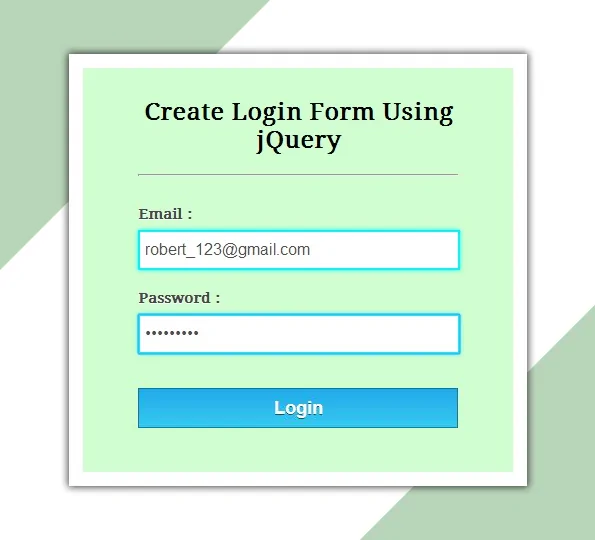
Keeping this mind, I’ve designed a small script to introduce a sliding login box into your website, just as you see in Twitter login page. The script comprises jQuery & CSS techniques to display this arty feature. Checkout the code below and try it yourself or simply download the ready to use files.

HTML

<div id="demo-header">

	<!-- Code for Login Link -->
	<a id="login-link" title="Login" href="#login">Clients Area</a>

	<!-- Code for login panel -->
	<div id="login-panel">
		<form action="" method="post">
			<label>Username: <input type=text name=username value="" /> </label>
			<label>Password: <input type=password name=password value="" /> </label>
			<input type=submit name=submit value="Sign In" /> <small>Press ESC to close</small>
		</form>
	</div>

</div>

CSS

<style type=text/css>

    a{text-decoration:none;}

    #demo-header{
        width: 980px;
        margin: 0 auto;
        position: relative;
    }
    #login-link{
        position: absolute;
        top: 0px;
        right: 0px;
        display: block;
        background: #2a2a2a;
        padding: 5px 15px 5px 15px;
        color: #FFF;
    }
    #login-panel{
        position: absolute;
        top: 26px;
        right: 0px;
        width: 190px;
        padding: 10px 15px 5px 15px;
        background: #2a2a2a;
        font-size: 8pt;
        font-weight: bold;
        color: #FFF;
        display: none; 
    }
    label{
        line-height: 1.8;
    }
</style>

jQuery

<script src=//ajax.googleapis.com/ajax/libs/jquery/1.11.0/jquery.min.js></script>
<script type=text/javascript>

	// jQuery to apply actions to the link
	$(document).ready(function(){
	    $("#login-link").click(function(){
	        $("#login-panel").slideToggle(200);
	    })
	})

	//jQuery to apply actions to the ESC key
	$(document).keydown(function(e) {
	    if (e.keyCode == 27) {
	        $("#login-panel").hide(0);
	    }
	});

</script>
Contact Us

See Our Portfolio

How to make Blurry Text with CSS

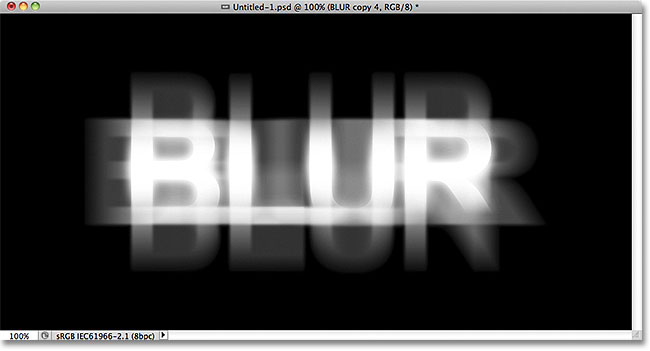
Its pretty easy to make some blurry text with CSS. We can do it by just making the text color transparent and adding some text shadow. Here’s the code for the same:

Blurry Text with CSS

To do it on the normal text we can create a class and use SPAN tag to make the text blurry.

Example: This text will be blurry!

HTML Code

<span >This text will be blurry!</span>

CSS Code

.blur{
    color: transparent;
    text-shadow: 0 0 3px rgba( 0, 0, 0, 0.5);
}

We can make the links blurry on hover by adding the blurry styles on a: hover pseudo-class.

<a href="" title="">This link text will be blurry on hover.</a>
a.blurry-links{
    color:red;
}
a.blurry-links:hover{
    color: transparent;
    text-shadow: 0 0 3px rgba( 0, 0, 0, 0.5);
}

You can always change the RGB values and the opacity for the text-shadow property and have the blurry text in a different colors.

Contact Us

Our Website Design Sevices.

How to Create Pure CSS Accordion

In this tutorial, I’ll create a CSS Accordion without using any jQuery or Javascript. As I mentioned in my previous post “An easy way to create Tabbed Content with jQuery & CSS” displaying a lot of information on one page is a bit difficult and we can use tabbed content or accordions to achieve the same without compromising on user experience.

We can always use jQuery to include nice effects on our css accordion. However, we are going to create a pure css accordion that will work on any browser, with or without javascript enabled.

Lets start with writing some HTML Code. We will use UL (unordered list) element to create our pure css accordion.

HTML Code for pure CSS Accordion:

<ul id="accordion">
  <li>
    <h2>Title One</h2>
    <div >
      Lorem ipsum dolor sit amet, consectetur adipisicing elit, sed do eiusmod
      tempor incididunt ut labore et dolore magna aliqua. Ut enim ad minim veniam.
    </div>
  </li>
  <li>
    <h2>Title Two</h2>
    <div >
      Tempor incididunt ut labore et dolore magna aliqua. Ut enim ad minim veniam,
      quis nostrud exercitation ullamco laboris nisi ut aliquip ex ea commodo.
    </div>
  </li>
  <li>
    <h2>Title Three</h2>
    <div >
      Quis nostrud exercitation ullamco laboris nisi ut aliquip ex ea commodo
      consequat. Duis aute irure dolor in reprehenderit in voluptate velit esse.
    </div>
  </li>
  <li>
    <h2>Title Four</h2>
    <div >
      Consequat. Duis aute irure dolor in reprehenderit in voluptate velit esse
      cillum dolore eu fugiat nulla pariatur. Excepteur sint occaecat cupidatat non
      proident, sunt in culpa qui officia deserunt mollit anim id est laborum.
    </div>
  </li>
</ul>

As you can see, I have a UL element and added a class named “accordion”. Within the LI element, I have H2 and a DIV tag with class “content”. And we will play with the CSS display attribute to create our pure css accordion.

Lets write some CSS code to stylise the same and hide our DIV.content within the LI tags.

CSS Code for pure CSS Accordion:

#accordion{
    width: 600px;
    margin: 0px;
    padding: 0px;
    list-style: none;
}
#accordion h2{
    font-size: 12pt;
    margin: 0px;
    padding: 10px;
    background: #ccc;
    border-bottom: 1px solid #fff;
}
#accordion li div.content{
    display: none;
    padding: 10px;
    background: #f9f9f9;
    border: 1px solid #ddd;
}
#accordion li:hover div.content{
    display: inherit;
}

As you can see in above code, we have used display: none for the div.content and on li:hover we have used display:inherit . The div.content is within the list element so this trick would work. If our div.content would have been outside this panel, we would have used jQuery to achieve the same.

Very soon, I’ll explain to achieve the same with jQuery and will use some nice animation as well.

contact us

Best Website Designing Services

jQuery CSS Class playground

Today we will play with jQuery CSS class methods such as addClassremoveClasshasClass, and toggleClass and learn some basic implementation to modify the HTML styles on the fly.

jQuery CSS Class Methods:

Let’s understand this is a small piece of code. First things first, You must include the jQuery library in the <head>…</head>  tag.

<script src=PATH_TO_JQUERY/jquery.min.js></script>

Now our page has the jQuery library so let’s add some HTML and CSS to play with the jQuery CSS Class methods.

HTML Code:

<div id="elem">
  This is a content panel
</div>

<p>
  <a href="#" >addClass</a> /
  <a href="#" >removeClass</a> /
  <a href="#" >toggleClass</a> /
  <a href="#" >hasClass</a>
</p>

Here we have a DIV tag with ID set to element and we will use this ID to play with jQuery CSS class methods. Below that, we have a paragraph element and four links with different class names. Let’s write some CSS code and I will explain the functionality of each link when we add jQuery code.

 CSS Code

#elem{
	width: 400px;
	text-align: center;
	padding: 20px 0;
	background: #ffffff;
	border: 1px solid #ddd;
	margin: 100px auto 30px auto;
}

.hover{
	background: #cc0000 !important;
	color: #fff !important;
	border: 1px solid #990000 !important;
}

In the CSS styles, I’ve added some styles to our DIV#elem element and also created a class named hover which will change the background, color, and border of the DIV#elem.

Now let’s add some jQuery code and learn how these jQuery CSS methods work.

$(document).ready(function(){
	// Add the class
	$('a.add-class').click(function(){
		$("#elem").addClass('hover');
		$("#elem").html('Class added ".hover"');
		return false;
	});

	// Remove the class
	$('a.remove-class').click(function(){
		$("#elem").removeClass('hover');
		$("#elem").html('Class removed ".hover"');
		return false;
	});

	// Toggle the class and check if the class has been already added or not
	$('a.toggle-class').click(function(){

		$("#elem").toggleClass('hover');

		if($("#elem").hasClass('hover')){
			$("#elem").html('Class added ".hover"');
		}else{
			$("#elem").html('Class removed ".hover"');
		}

		return false;
	});

	// Checks if the class has been already added or not
	$('a.has-class').click(function(){

		if($("#elem").hasClass('hover')){
			$("#elem").html('Class found ".hover"');
		}else{
			$("#elem").html('Class not found ".hover"');
		}

		return false;
	});

});

In the JQuery code, I’ve used the click trigger for all four links we added in the HTML code above. Also, I’ve used return false;  so when we click on the link it should not redirect the user to any page or use # in the current page URL. Also, I’ve added another line of code to modify the HTML of the #elem element when we click on these links. Don’t get confused with the .html() method, this is not required, I just added it to explain the functionality.

The first link with class .add-class will add the .hover class to the #elem element. If you want to add multiple classes with one trigger you can specify different class names separated with a space as we normally do in normal HTML code. Once we click on this link, .hover class will be added to the #elem HTML element and the inner HTML will be changed and show us the result. You can click on the address link above and see it in action.

The second link with class .remove-class will remove the .hover class from the #elem element. If the element doesn’t have a .hover class, it won’t do anything so the remove class will be used only to remove any applied class.

The third link with class .toggleClass will toggle the .hove class on #elem element. If the element does not have a .hover class it will add the same otherwise vice versa. In this code, I’ve used the jQuery CSS method hasClass to check if the element has the .hover class or not. and the content of the #elem element is changed accordingly.

The fourth link will only check if the class .hover is applied to the #elem element or not and change the HTML code of the #elem element accordingly.

I hope this will clarify any doubts on using these methods, in case you have any questions or suggestions, please use the comments below to start a conversation on this topic.

contact us

Web development Services

Enquiry Now

When We Work Together

We can create something incredible

arrow
HQ INDIA
HQ INDIA
C-31, Milap Nagar,
Uttam Nagar, New Delhi,
Delhi 110059
USA
USA
6715 Backlick Rd Suite 202
Springfield,
VA 22150, USA
AUSTRALIA
AUSTRALIA
2/51, Lane Cres,
Reservoir, VIC
3037, Australia
CANADA
CANADA
61 Payzant Bog Road, Falmouth, NS, B0P 1P0, CANADA
UK
UK
3rd Floor, 131 City Road, London, EC1V 2NX, United Kingdom
UAE
UAE
Boutik Mall, Al Reem Island - Abu Dhabi, UAE
X

Let Us Call You Back

  • India+91
  • United States+1
  • United Arab Emirates+971

Your phone number is kept confidential
and not shared with others.